One pack for all situations. The SF in the name tells you exactly what this pack is designed for, and after six months of getting lugged around, it doesn’t disappoint.
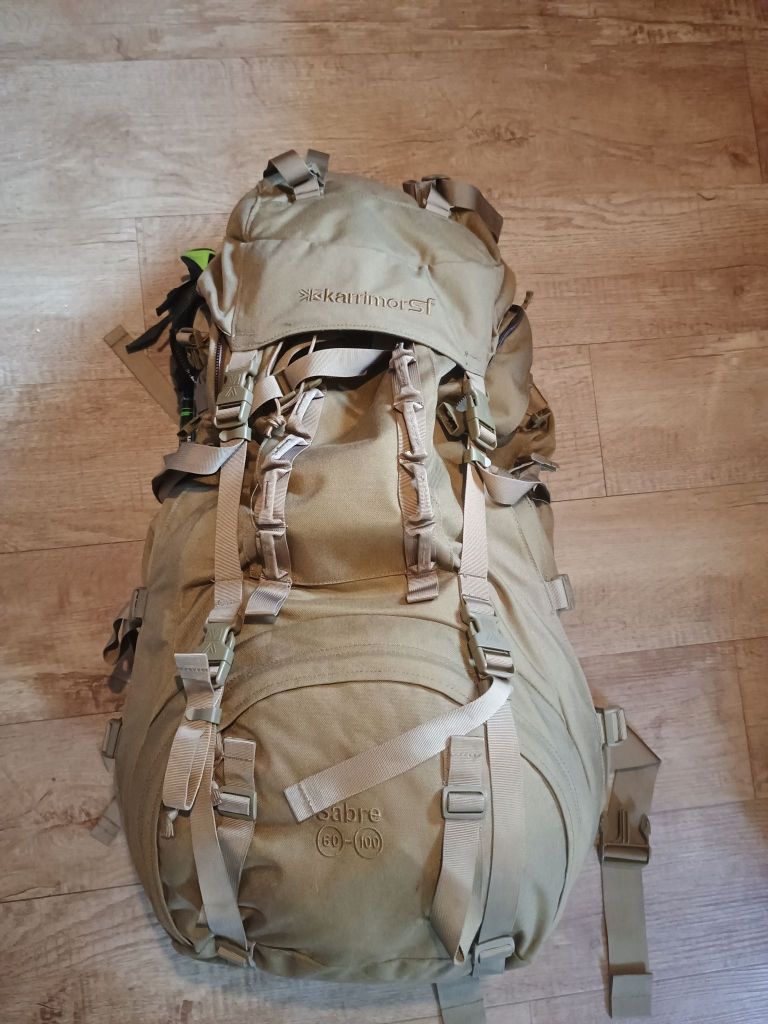
I needed a new pack for all my travels, milsims, wild camping and hiking. In the previous article I talked about what I was looking for in a pack and why, and this is what I settled on. The Karrimor SF (Special Forces) Sabre 60-100 is the latest in a long line of Sabre rucksacks that have seen service across the world. It’s one of the reasons I put my faith in it rather than anything experimental and new; we have so many tactical companies starting up every month but few will have experience in their early days. Products take time and testing to develop, and I wasn’t looking to buy several rucksacks to test out. I wanted something that was already proven.
Some quick details on the pack first.
- 60-100l
- SA (Size adjustable) back system
- 1000D Nylon
- Waterproof PU coating on the inside, DWR waterproofing on the outside.
- 60x30cm (I’m almost certain it’s a bit taller than that, probably excludes the lid)
- 3.85kg
- Comes in Black, Green, Coyote, Grey and an IRR Multicam, which costs a bit extra
Just looking at those details from the manufacturer, it’s a pretty heavy duty, solid pack. Exactly what I need instead of some delicate ultralight bin bag with straps. I picked up the Coyote version. A few years ago I picked up some green Karrimor bergen side pouches but couldn’t get the pack in green when I needed it, although to be fair the coyote is an excellent colour up on the hills in the UK and I do prefer it. It’s thankfully not a bright desert tan colour.
I wanted to get some use out of it before talking about it, because we don’t do “fresh from the box” reviews here, and I’ve just got back from a week long wild camping trip so now is a good time as I’m sorting gear out.
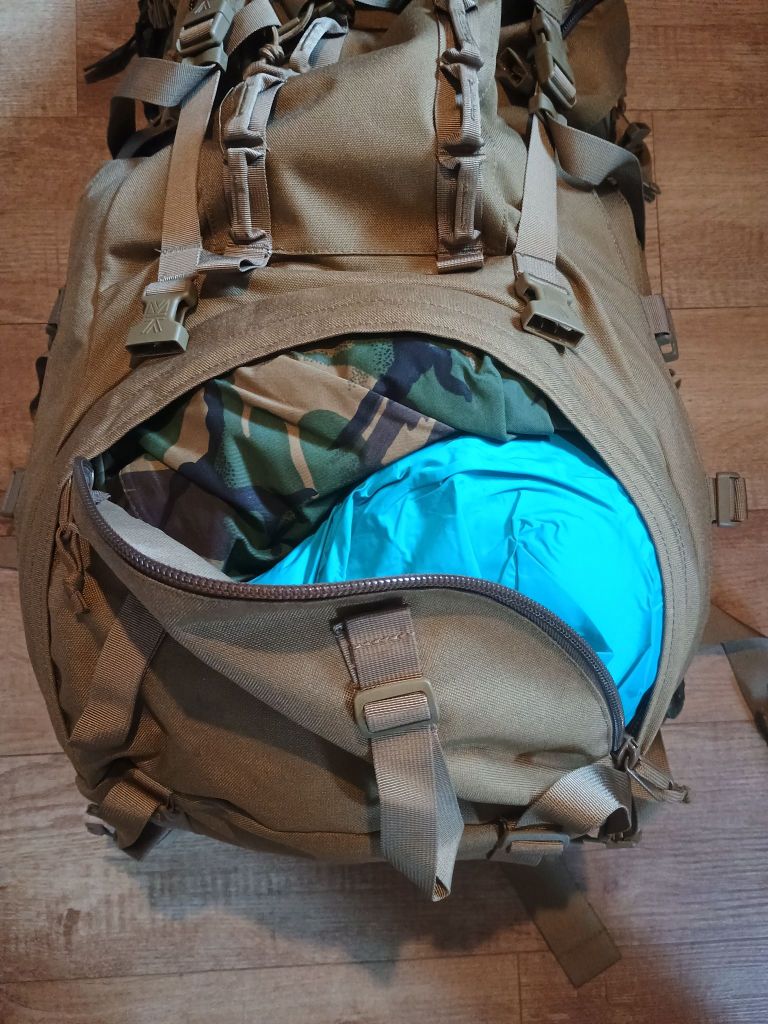
Starting at the bottom, as with any good pack it has a separate zipped compartment at the bottom for your quick access gear. In this case, I put my tarp and sleep kit so that it’s all together. There are adjustable straps on the bottom if you wanted to add a foam mat or similar. The zips on this pack are chunky and solid so no concerns there. Two buckles clip upwards onto the main portion of the pack to hold it closed without putting any stress on the zip.
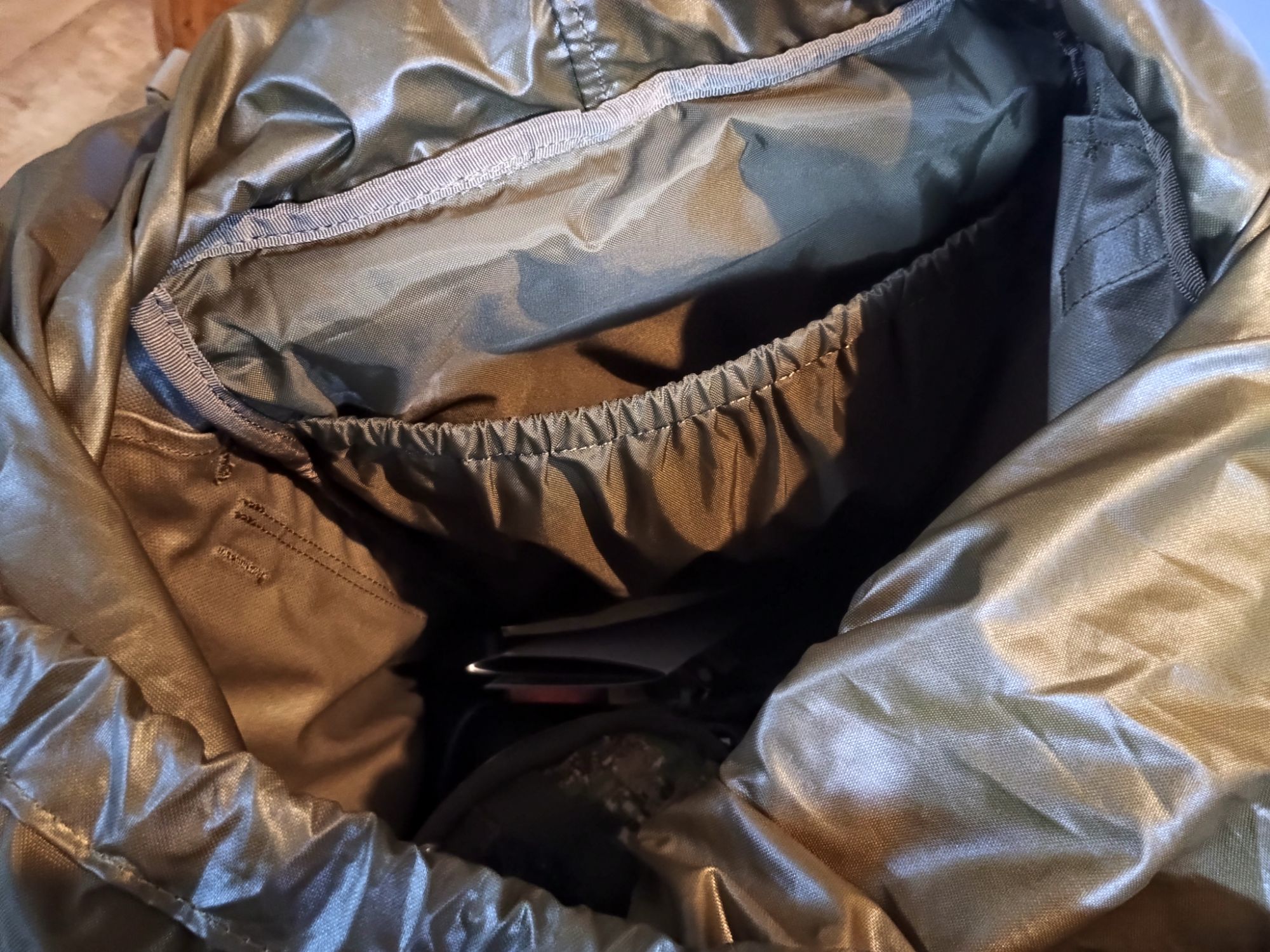
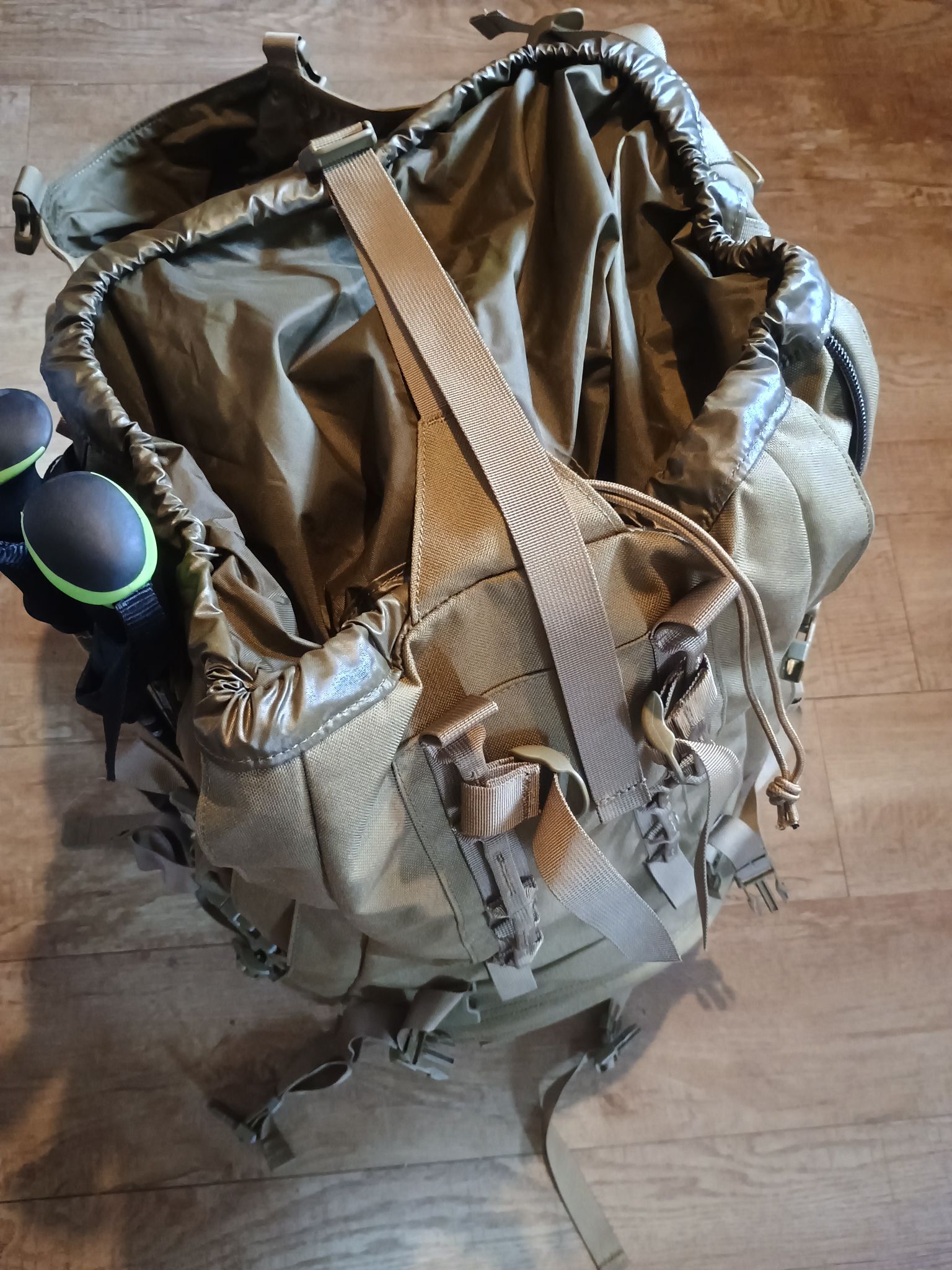
The bag is a 60l base that expands thanks to two zips that run from the top to the bottom of the pack and release more material so it expands the capacity. This was really useful because I’d packed it to the brim for a week away and when things don’t quite get folded neatly back up in heavy rain, you can just expand it to fit and get on with your trip. Conversely, there are a lot of straps and buckles to tighten the pack up and cinch things down when you want to compress your gear or just avoid having things slopping and flopping around. A nice touch is this strap that clips over the top of the main compartment, once the drawstring is used to pull it tight.
One the sides too, although also used for holding the side pouches in place, are more straps for holding externally mounted gear like these walking poles, or again just to compress the load. It’s the first pack I’ve had where it doesn’t need straps taped up, because it has little plastic clips to hold loose straps out of the way that are fitted onto the straps. It’s a clever little idea, because you can only really tapoe straps to apoint when you know you’re not going to adjust them.
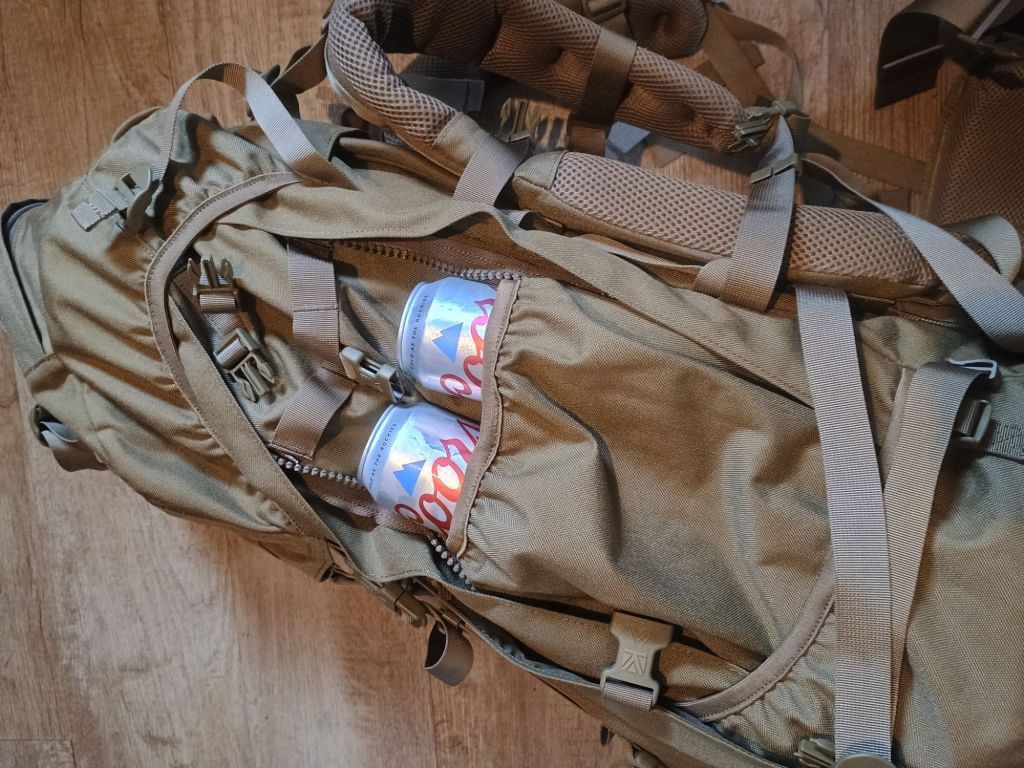
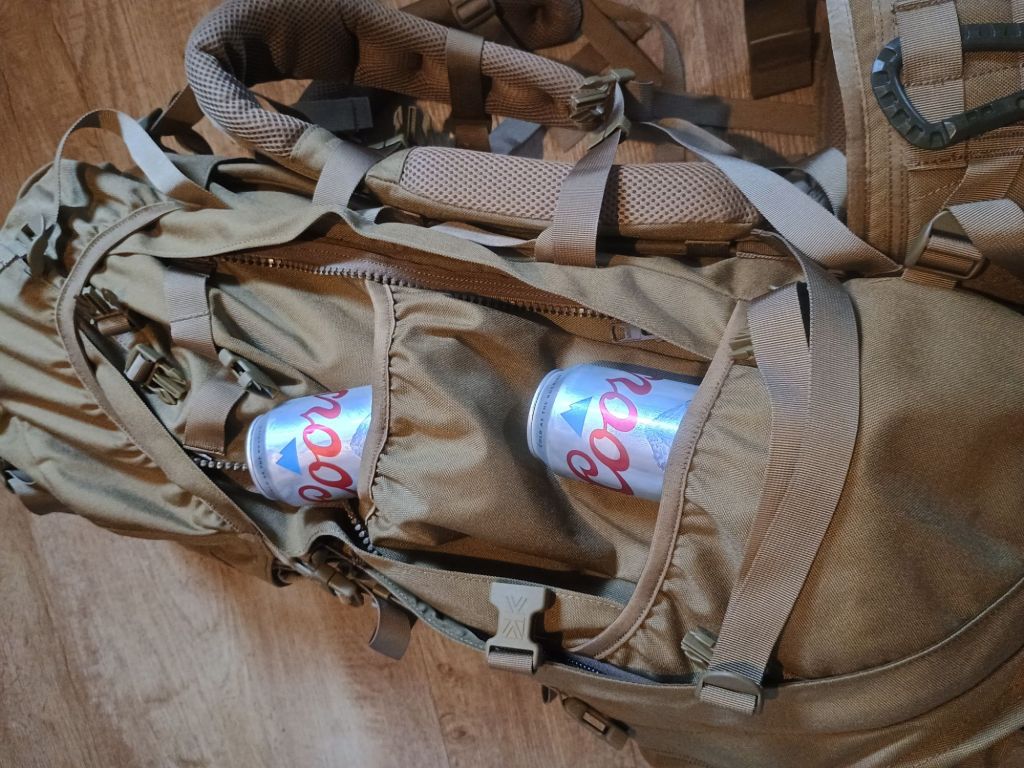
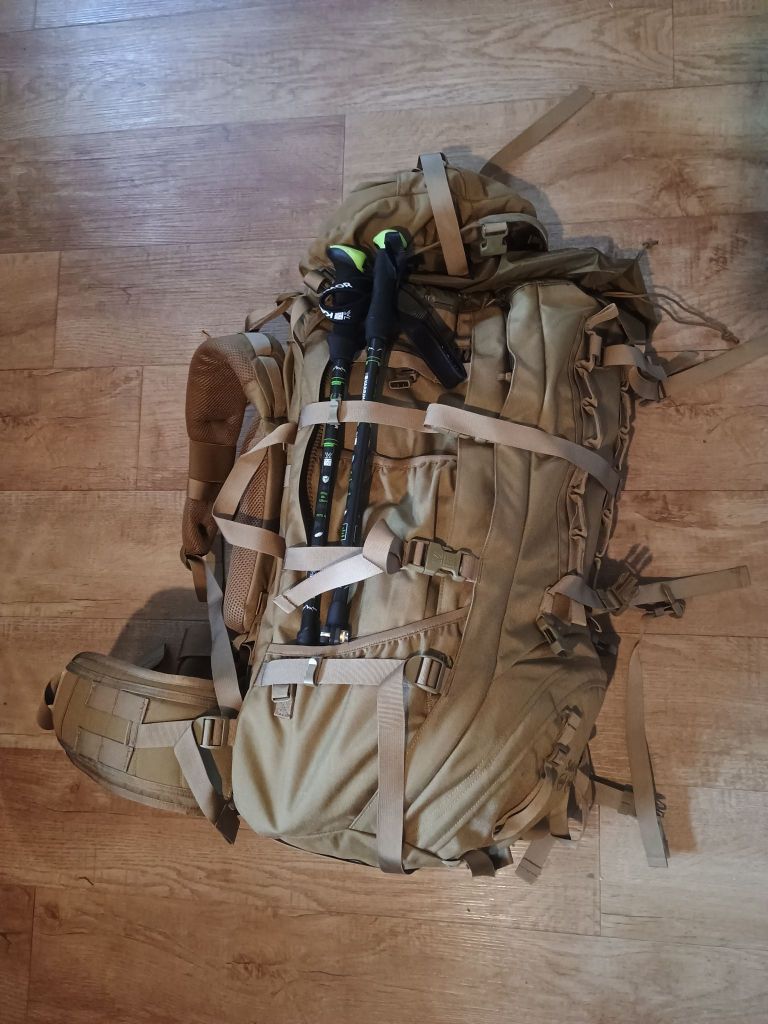
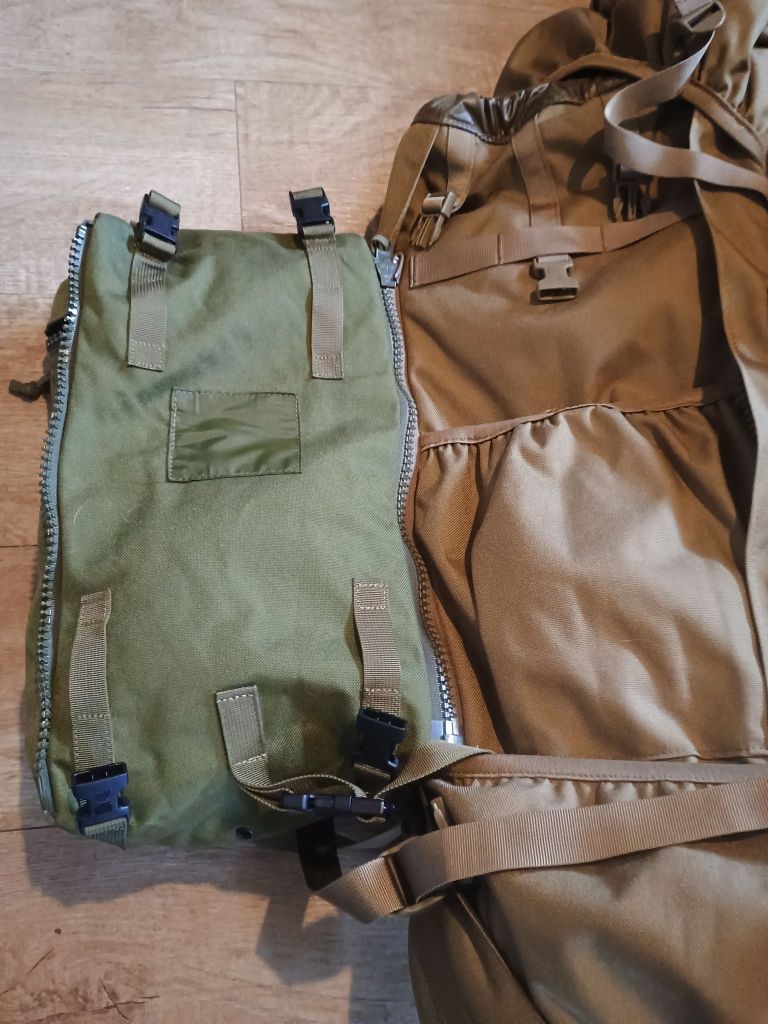
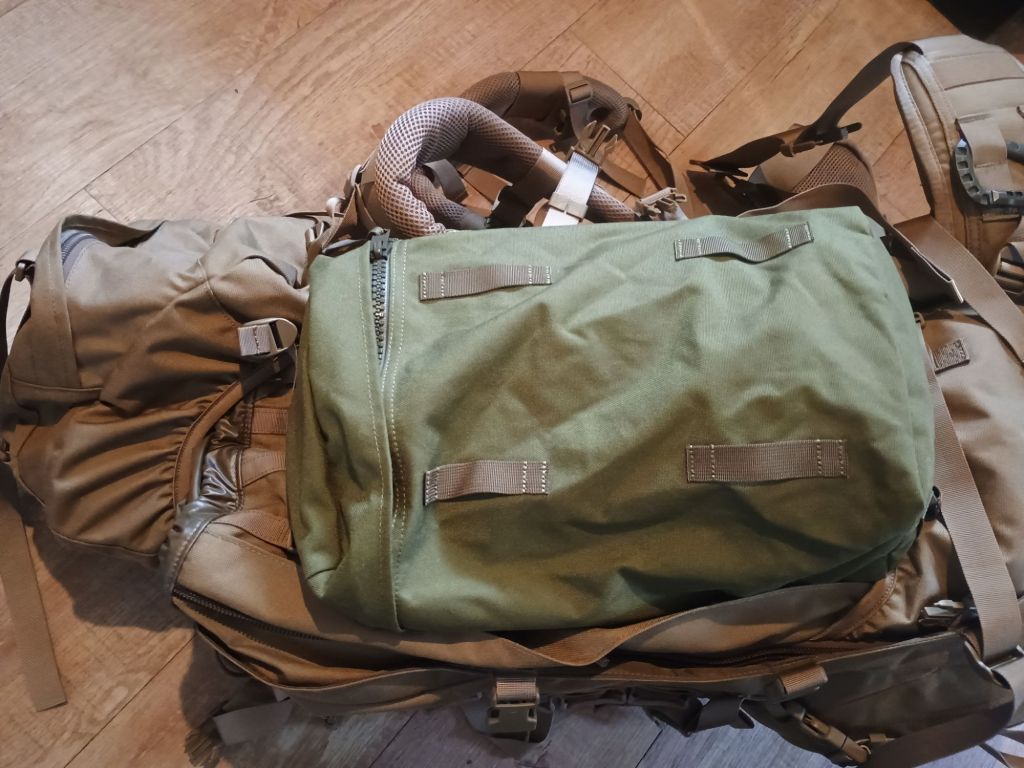
The side pouches are the classic PLCE type, which I find a lot easier than MOLLE for adding and removing. Just zips on both sides, a little clip at the top and then thread the side straps through to hold it in place. I already had some Karrimor Sabre side pouches to use, but it will work with British Army issue, Berghaus, or other PLCE pouches all the same. The side pouches are 10l each, which hold a good amount of kit (I have one currently set up with a groundsheet, basha, pegs and cordage which is an entire shelter system without touching the main compartment). Old school, but it works really well and with the side pouches attached, you can still slide kit in behind the pouch and it’ll slot into the pockets to stop it falling through.
Without adding the side pouches, because this pack is not short on capacity anyway, there are two side pockets per side which are ideal for waterproofs, water bottles, or drinks cans. This is the sort of stuff you want access to without having to dig inside your kit, especially if it’s all in drybags inside.
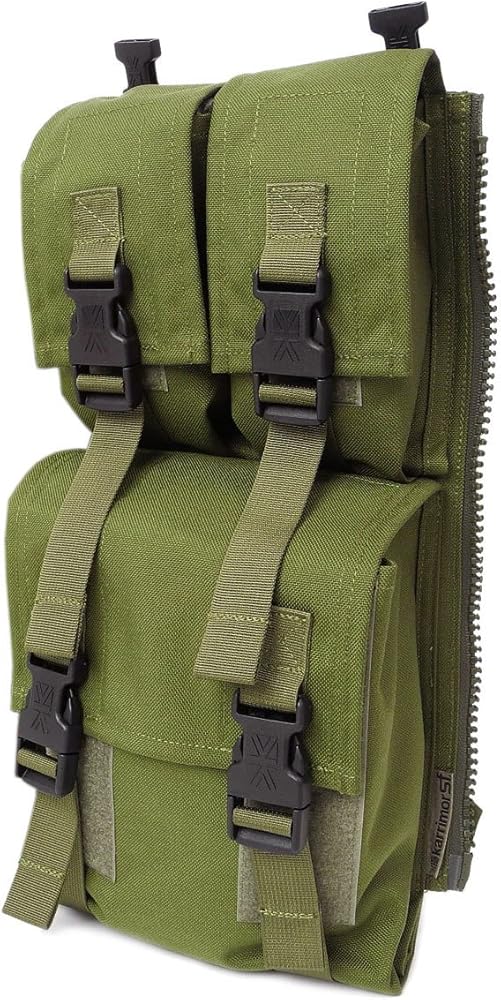
And while I’m on, Karrimor do make a different style of side panel as well instead of the big bergen style pouches – this ammo style pouch if you want more organisation at the expense of capacity. Or mix and match the two sides.
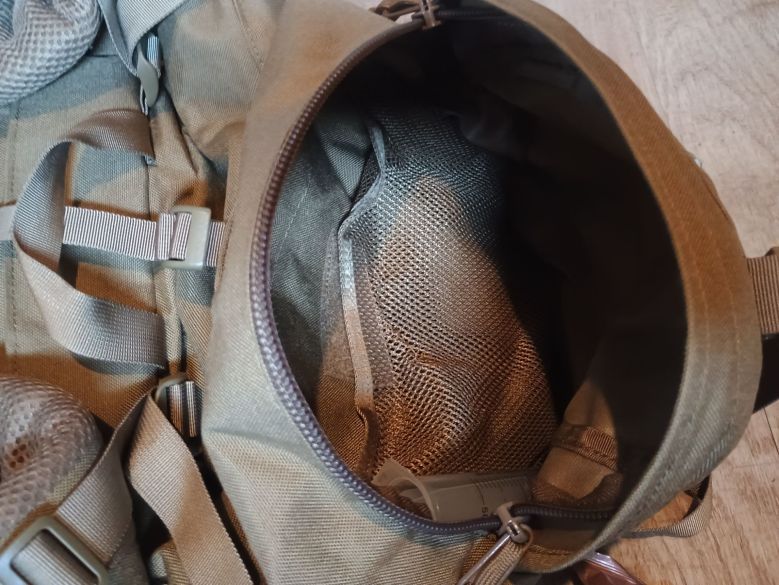
The lid has a main compartment with a mesh pocket inside that fits the waterproof cover, and the inside of the lid has another small zipped compartment as well. Both were used for those things you need quickly, like a first aid pouch or headtorch. The lid also has more straps for holding more gear, in case the capacity still isn’t enough for you.
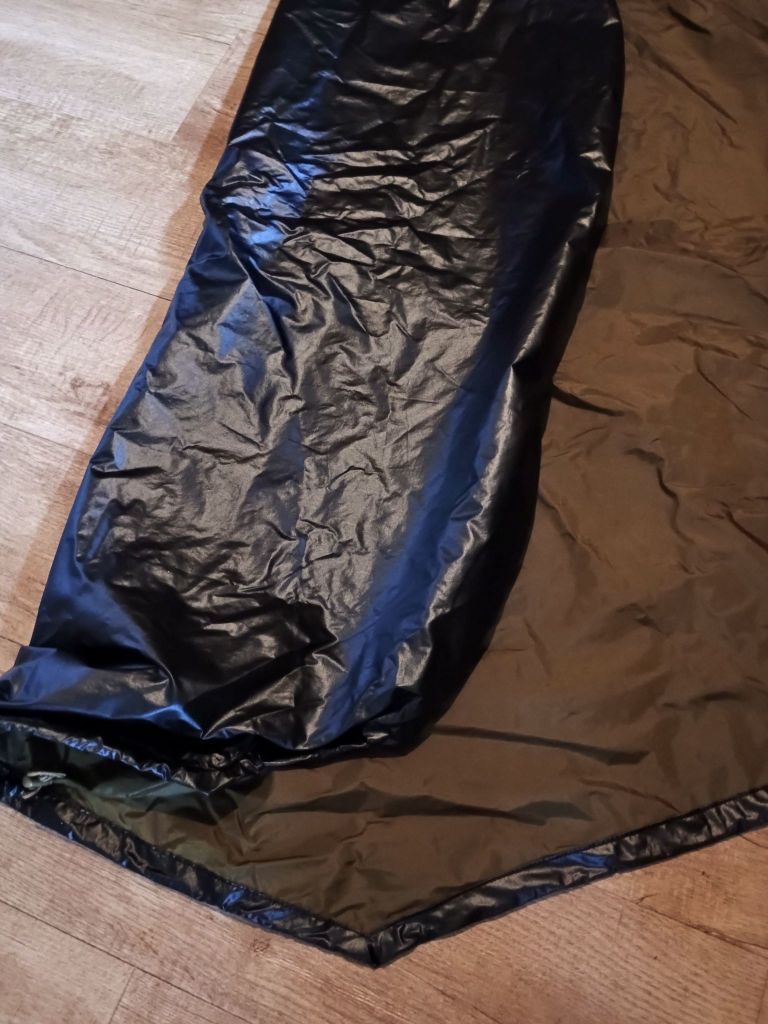
The included waterproof cover is an interesting design. It opens flat, with a cord running around the outside so you can pull it tight around the pack and get that “shell” shape you find on cheaper covers. It’s a two-layer cover as well; I did note that the outer green layer looked like it was soaking water in rather than the rain beading on the surface, but the black layer inside kept things dry. I’d imagine it’s the same way they’ve waterproofed the bag, in having a DWR water-resistant outer with a PU-coated inner. It feels a much nicer quality and heavier duty than the plastic rain covers that are more common, and it also served another purpose while I was out and about in the wild – as a sit mat and a bit of a groundsheet under my tarp to keep stuff dry off the wet floor. Yeah, it’s bigger and heavier than the superlight neon covers you normally find, and you do have a very long drawcord to manage but the fact that it has other uses is, well, useful. I like it a lot.
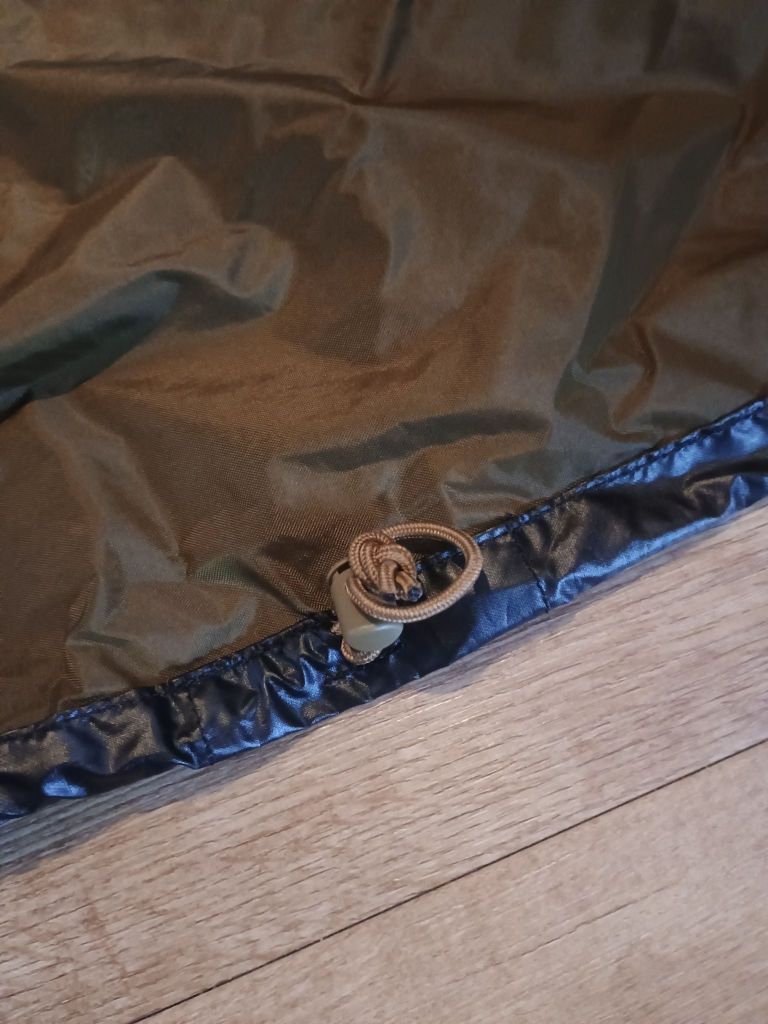
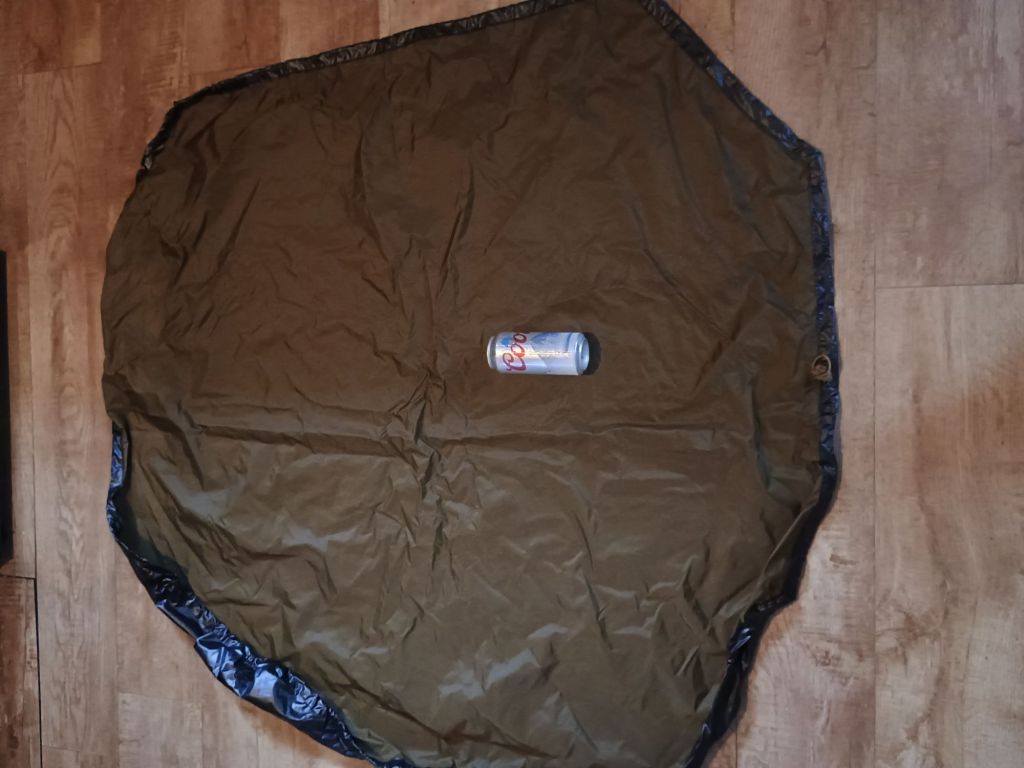
There’s an internal water bladder pouch, although I prefer bottles so it stayed empty. And that’s pretty much it – and why I like it. Enough pockets to be useful, not too many that your kit needs filed away in the right order in a hurry. It doesn’t have a front access zip but I’ve always felt they’re prone to leaking water and a potential point of failure anyway. The point of the main compartment, generally, is for the stuff you don’t need quickly but can grab when you either take a break or set up camp. The zipped lower compartment works nicely with a storm flap for rain so you can get your shelter set up while everything else stays put.
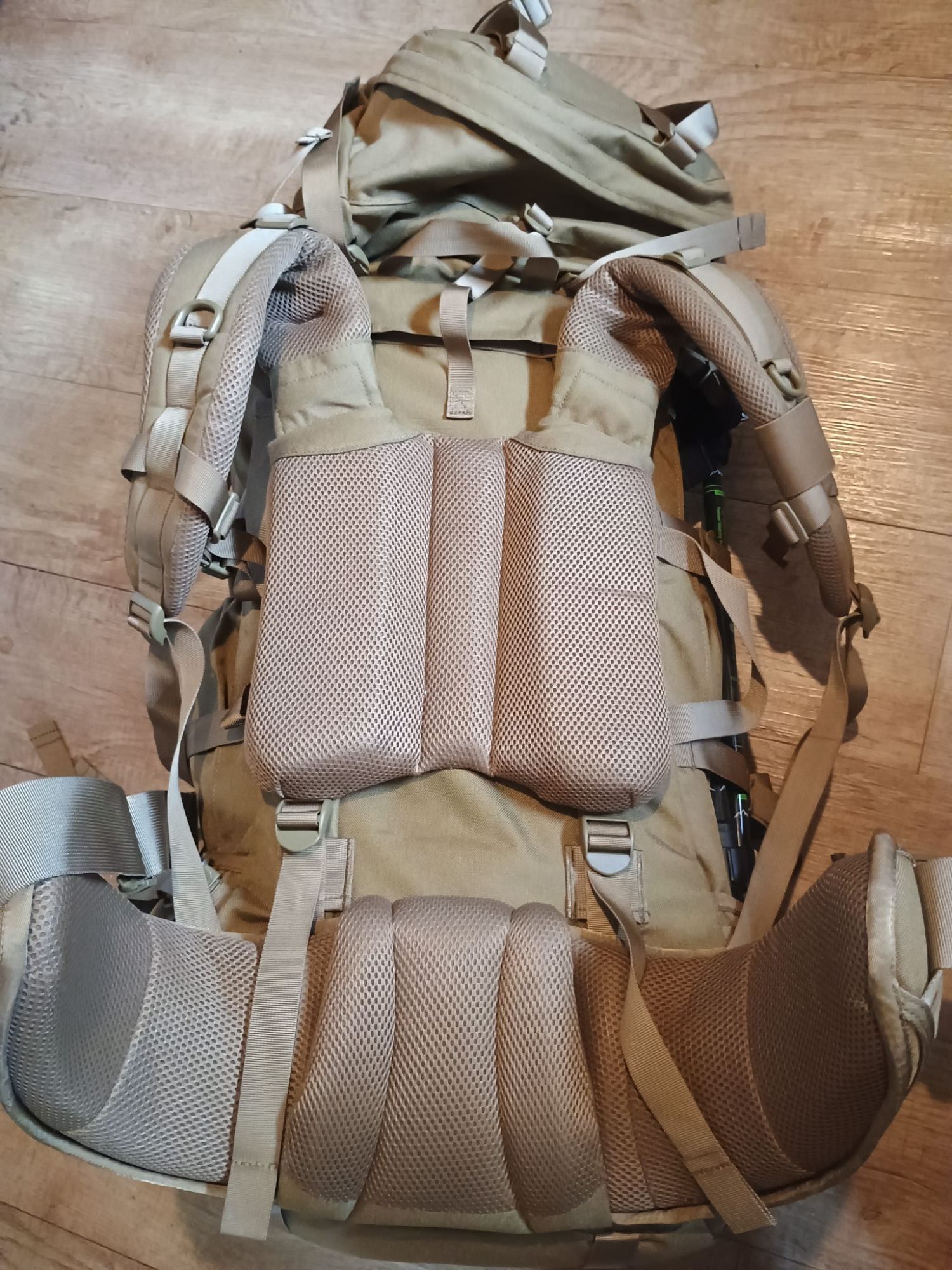
It’s a very comfortable pack too. The shoulder straps are well padded and the hip pad takes a lot of weight off. There’s a sternum strap as you’d expect to alleviate pressure, and the whole back is fully adjustable. The back padding slides freely up and down to a point set by the two adjustment straps – I had seen other packs where you need to measure yourself up first.
So, after travelling across the UK, doing some wild camping in both urban and rural environments, what are my thoughts on it?
It’s a top tier rucksack designed for the most extreme environments, that’s for sure. Far more extreme than I’ll probably put it through but when it comes to important parts of your kit, you need the best you can get. Yes it costs a bit more than an Amazon tactical bag but is still around the same price as many high street alternatives like Osprey etc. But instead of being something flimsy, lightweight and neon coloured, it’s a very rugged bag designed to survive all environments. There are parts of my kit where I could save weight and cost where it matters less, but this is the thing that carries all the kit and can’t fail you. It hasn’t so far and I don’t feel like it will. It’s a design that has persisted for years and become a favourite for a reason.
It’s not a “modern” zip opening rucksack, like a Mystery Ranch pack that seems ubiquitous in desert based tactical videos, where the rubber coating on the zips wears down with repeated use. It’s a bag suited to wet European climates with a proper lid and storm flap zip, and coated fabric just to be sure even without the cover. It has massive capacity if you need it and that nice standard 60l base setup if you don’t. And it’s comfortable over multiple days. It’s bombproof load bearing for all your gear.
I’d like to add in something negative to try and balance the review out so it doesn’t look like I’m being paid to pour sunshine on it, but I just can’t see anything at the moment. And for the record, I wasn’t sent this to test – I paid the £300 and it was definitely worth it.

