
2026 update
Ghillie materials have evolved enormously since the first guide as needs, experience and technology has changed not only on the Airsoft field, but in hunting, wildlife photography, and, of course, the modern battlefield itself.
It isn’t a case of simply attaching as many things to your suit as possible though. Every element needs to be correct for your environment, in shape, colour and texture. This article will give you the best options to attach to your suit and equipment, and it comes down to your understanding of your needs (which you can learn from the other articles in Ghillie and Camouflage) to determine what will work best.
The days of glueing artificial leaves to everything, or tying ten thousand strands of burlap to yourself to look like your grandmother’s knitting cupboard, are long gone. The modern ghillie needs to avoid detection by noise, infrared and thermal devices as well as fooling the human eye. We need suits that allow us to move through difficult terrain, which keeps us undetected. Materials that don’t catch or snag are important, as well as not overloading the suit. Overly shiny plastic materials are out, as they reflect light unnaturally and stand out. I highly recommend reading “The 7 S’s of Camouflage” with this article to get a better understanding of camouflage basics.
To start with, I’m going to assume you’ve picked a base suit to mount all these materials on that matches roughly the environment and season you’re in. The base of the suit does a lot of the work of camouflaging you, but it remains flat material and the job of the 3D elements on top is to disrupt the flat surface first, and then add in textures that are found locally to add to it. The goal is not to heap so much 3D on that the base is completely covered, because it’s going to be hot and heavy as a result, and we need to be able to get around quietly and stealthily.
ZIP TIES
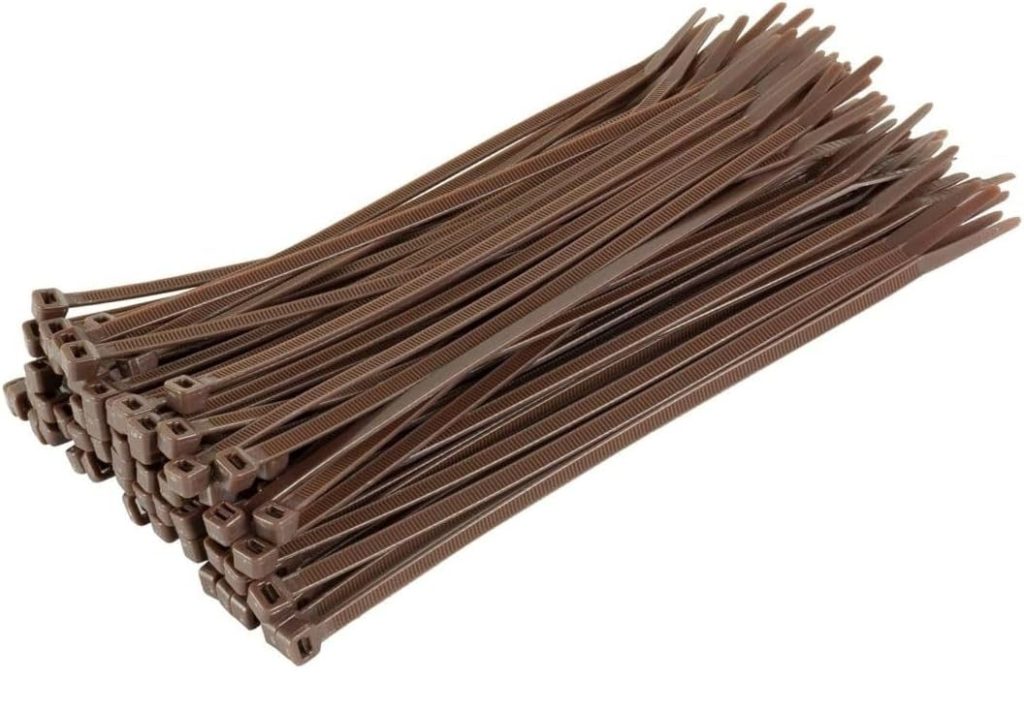
The first material you’ll want for all camouflage systems is 2.5mm brown micro zip ties like these, to hold everything on. They’re ideal because they are quick, clean and easy to cut off if you want to change things. Thread through the holes if you have a mesh suit, or use an awl like this to poke holes in BDU or other solid fabrics to thread the tie through. Nothing gets added to any of my kit without zip ties, they’re an essential first purchase. Glue is messy and permanent, which you don’t want, and there’s no way on this earth I’m spending a month sewing.
RAFFIA
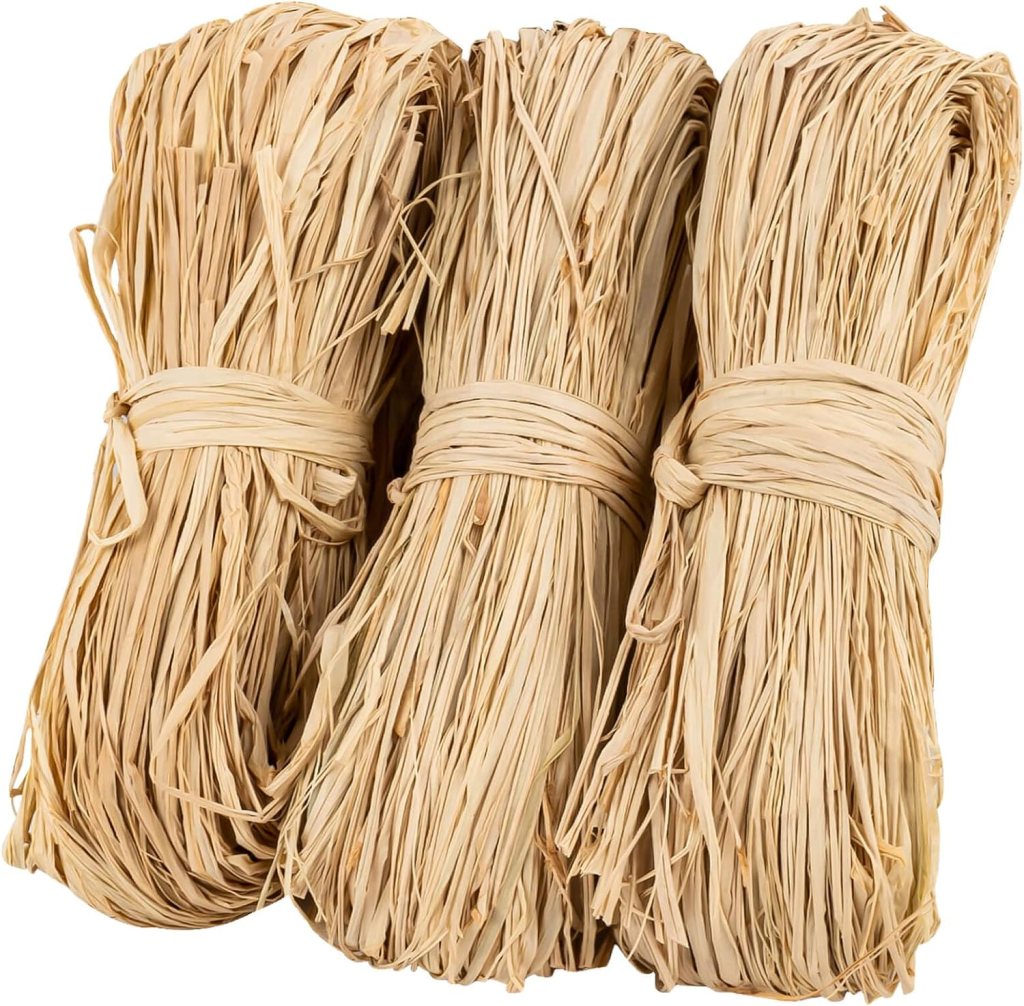
Raffia, I’ve said for years is God’s gift to snipers. Cheap, natural grass material that is found in almost every environment. It adds a lot of bulk and disruption without the weight, and can be used in tan to replicate dead grass, green for green grass, and even dark browns to add texture to forest floor suits. Keep the zip tie as loosely fastened as possible and tie it the raffia around in a knot before pulling the zip tie tight to keep it on. Pick up bundles like this.
COCONUT ROPE
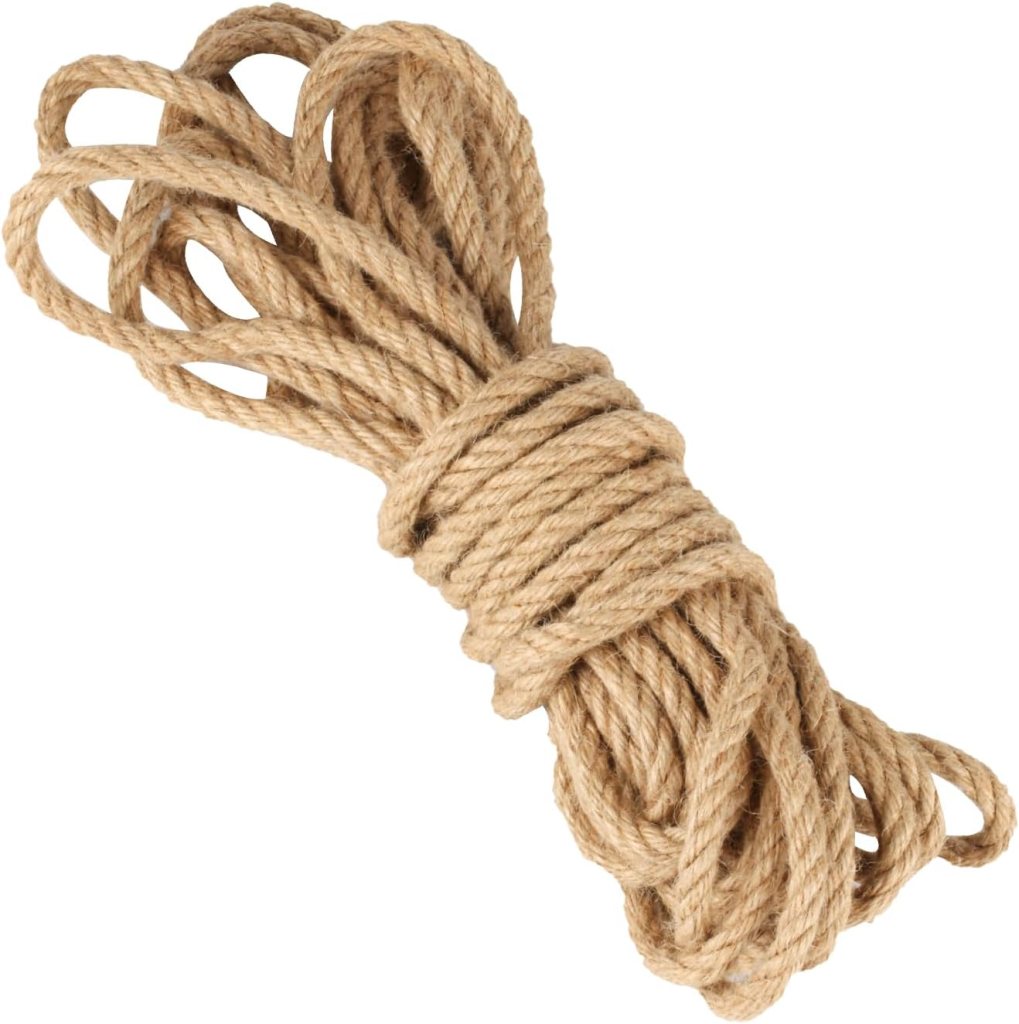
Coconut rope, or jute rope, is basically thin, natural rope that you can cut into pieces to replicate twigs without having hard, solid actual twigs or worse, plastic ones. The trick is to fool the human eye into seeing what looks like twigs at a distance – we’re not doing a photoshoot at one metre and picking it apart on social media. They can be easily sprayed with paints (I recommend flat dark earth and brown/grey colours) to take the rather vibrant natural colour off first. Then just cut 6-12 inch/15-30cm pieces and add them to your suit. It’s thicker than stuff like raffia or other threads and behaves more solidly, with less movement.
COTTON LEAVES
I’ve got a guide on making these in the Cotton Ghillie Leaves article. Although it sounds a bit simple, basic cotton dyes well to a range of colours and is extremely useful to us because it adapts to wet weather – it darkens like the environment around it which is important in changeable climates. Although less realistic up close, they do a better job than the cheap micro-pattern printed “leaf strips” that are available from some ghillie stores. Being a heavier fabric, they don’t ripple as easily in a breeze (that movement gives you away) and the natural fabric doesn’t glow under night vision. Often overlooked in favour of more high tech solutions, but a staple material.
SPRAY PAINT
Probably pointing out the blindingly obvious here, but sprays are essential for adjusting colours quickly and easily on all your kit. Get good, neutral colours. It’s good to have a tan, dark earth and then a grey/brown such as RAL7013 in your kit for most of the work (light, mid, dark browns) and add suitable greens. Don’t get bright vibrant jungle greens for a dark pine forest for example. And don’t go out and buy 30 paints so you have every tone inbetween – you want contrast to break up shapes, not a blended mess that will merge into one solid pattern at a distance. Skirmshop UK do a decent range in this link, and if you click discount codes on the top of the page there’s some money off for you.
SNIPER TAPE
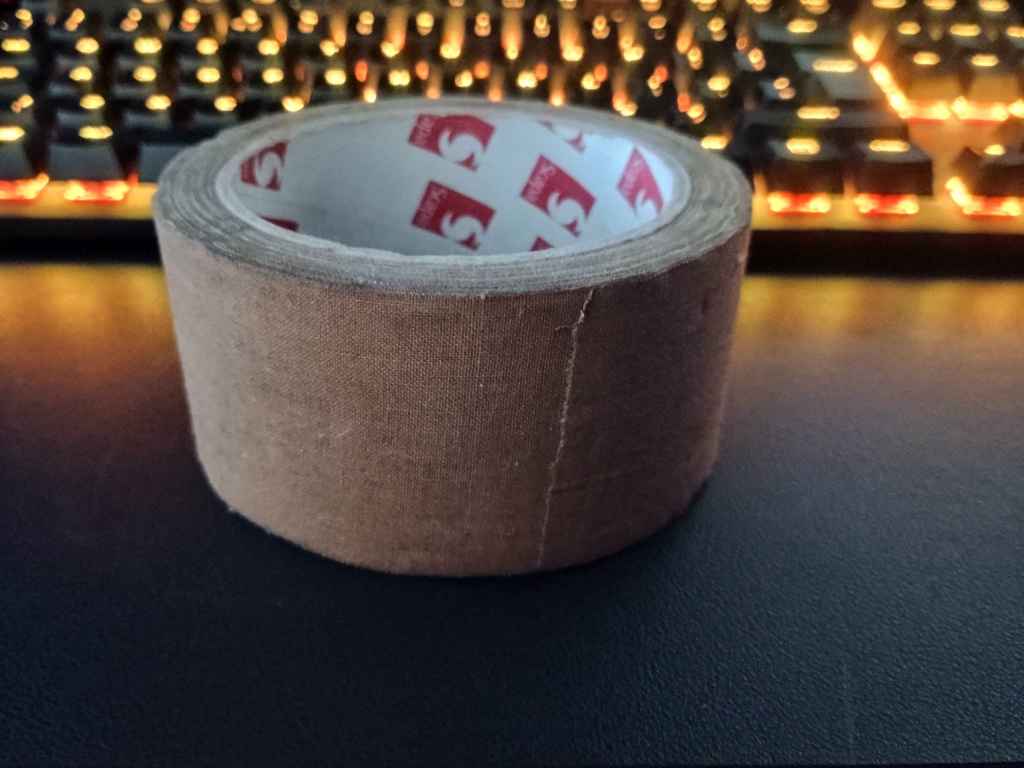
There are a lot of tapes on the market. Unfortunately most of them are crap. Tape is important to apply to things we don’t want to paint but need to cover up, like radios, or flat smooth surfaces like guns or antennae. Even spray-painted with matte effect spray paint, the gun is still so smooth it reflects light and that’s why it stands out. Gun wraps are an option, but can cause your gun to snag a bit. Avoid self cling tape (it falls off) and pre printed tapes in leafy camo patterns because they tend to be almost laminated and give off even more shine. The one I rely on is Scapa tape, or British Army Sniper tape. Only comes in a dodgy green and a tan colour, so it’ll need some paint to break it up but it eliminates shine really well. If anyone has any other fabric tape recommendations, please drop it in the comments.
HALOSCREEN
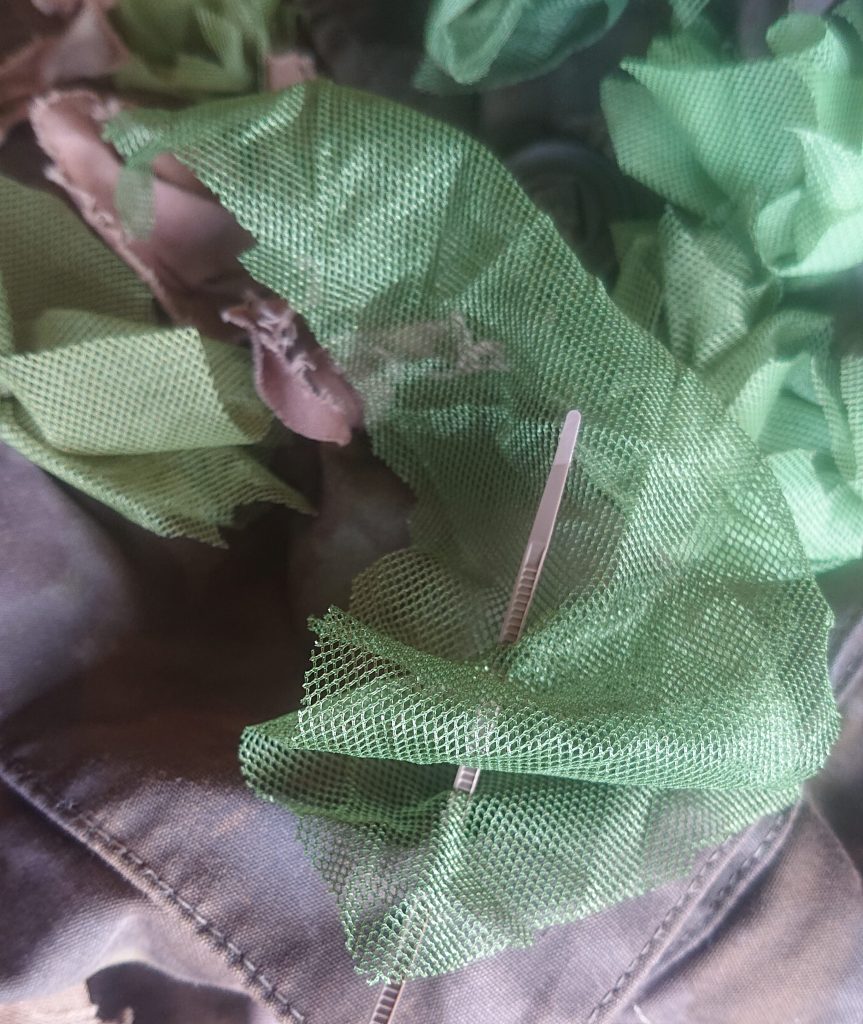
Haloscreen came to us in 2019 from Le Covert Sartorialist, and was a game changing material. Green positive space mesh fabric that reacts to light and colours really well. I have a guide to Haloscreen here for more reading. It’s since been copied but never improved because the colour selection on the original, real stuff is so much better. A little more expensive, but a starter pack is enough for your full kit. Use it on top of green patterns on your camouflage for best effect, and layer colours for more depth. It’s since been released in laser cut forms as well, making it much quicker to cover your suit. Available across the world through Skirmshop, Sprinter Custom Ghillie and Oakmaster.
NANOSCREEN
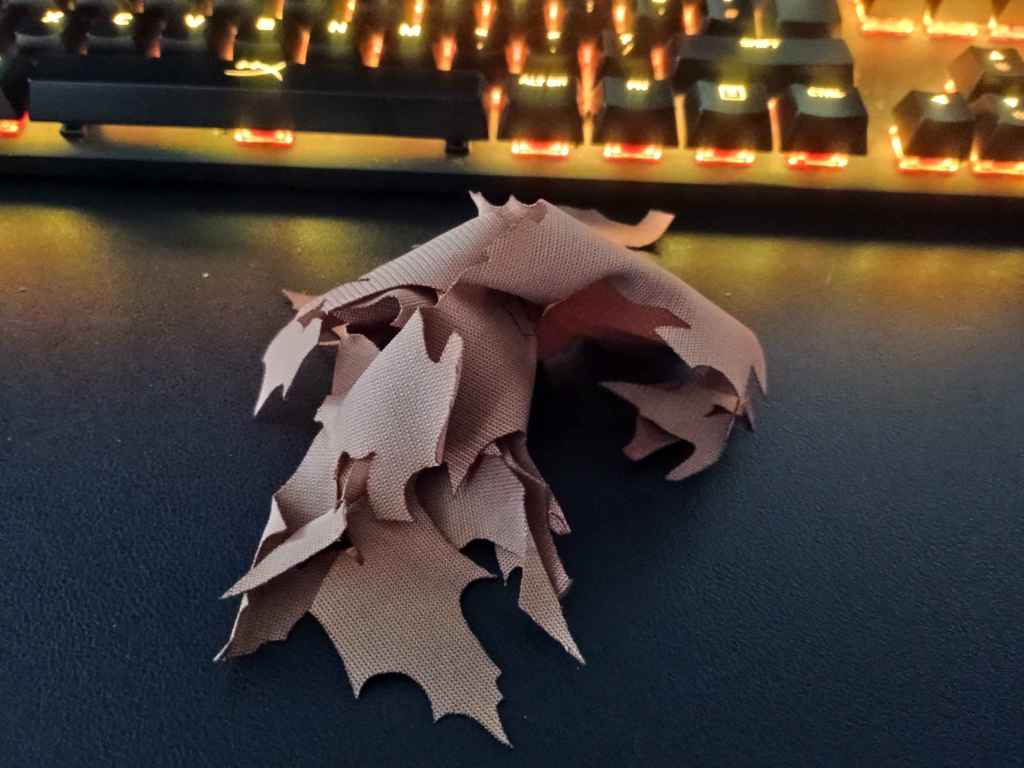
Nanoscreen, also from Le Covert Sartorialist, is the negative space brown fabric to complement Haloscreen. It’s similar to cotton in that it reacts when wet and darkens, but also changes colour appearance in different lighting conditions. You could think of it as pre-coloured (perfect colours as well, saves messing around with dyes yourself) cotton that is lighter weight. Again available at your local Skirmshop, Sprinter Custom Ghillie and Oakmaster. If you check out Oakmaster, they do it as part of a handy kit alongside our next material;
MACRONET
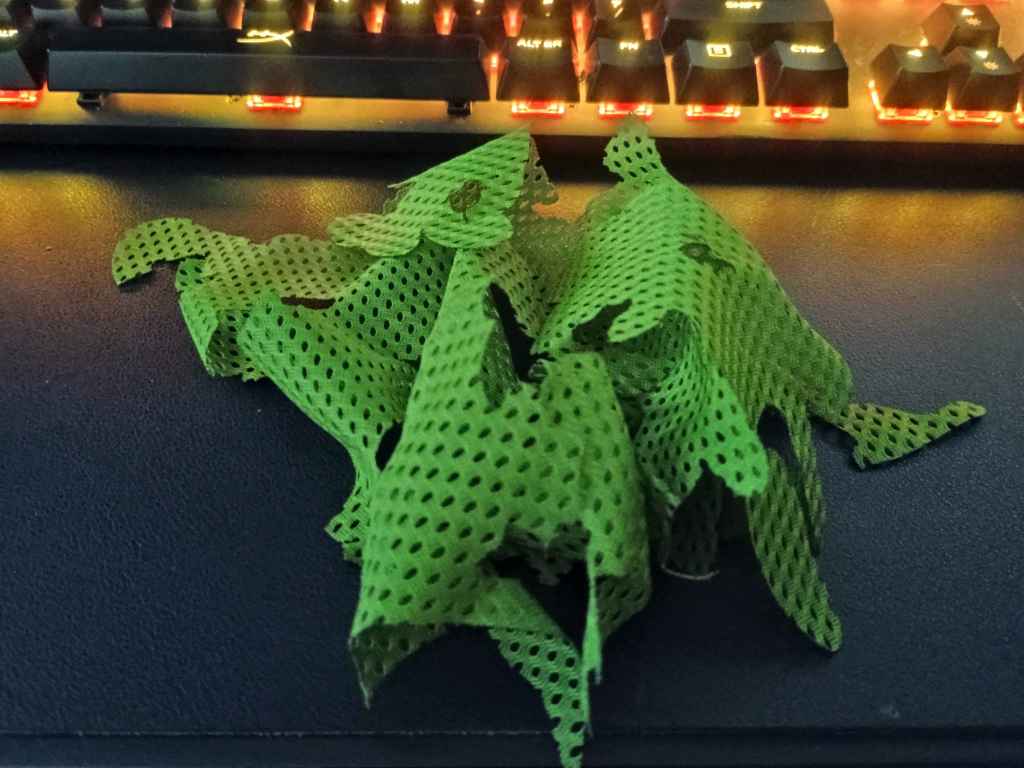
Bigger, chunkier versions of Haloscreen and Nanoscreen, working in neutral space (both) similarly to the old jute and burlap string stuff, although I do like to use all three for my kit. Macronet comes as larger pre-cut elements, making it even quicker to camouflage your kit or change your existing ghillie as the seasons change. It reflects light very well which is important to avoid looking like the old polyester leaf suits.
SCRIM
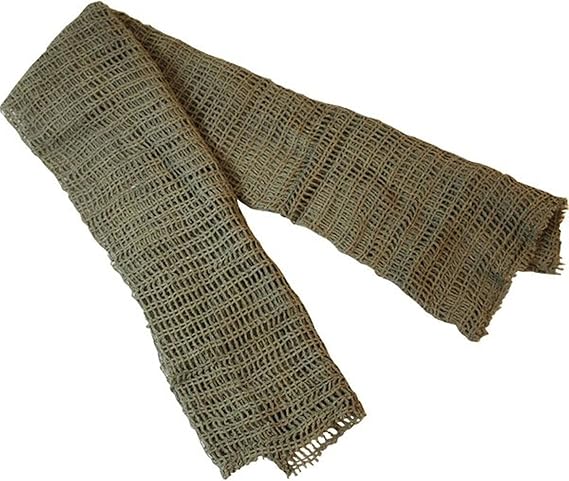
Ok, it’s a bit old school but scrim scarves like this one are a useful texture and can also provide extra cover for your face without blocking your vision completely, and can be used as a base to tie other materials onto on things like pistol holsters for example. It’s one of those things I always have in my crafting bag just in case I need it anywhere. Not to be confused with helmet scrim which is the noisy polyester leaf stuff normally used on helmets.
CONCLUSION
And that’s it really. Not a super long list, but the materials here are enough to cover most terrain types used in different combinations. It’s not a terrarium; we don’t need to be creating a nature diorama on our suits for super close photography. The idea with camouflage is that it’s enough to break up your shape, hide the human outline and make it difficult for the eye to recognise what it’s seeing.
The base suit is doing a lot of the work. All you’re doing with the 3D is enhancing that. you can carry an awl, some kind of cutters and spare zip ties to your environment as well if you want to add some natural foliage, although try to avoid anything living because it’ll die off quickly and look weird (I know the real snipers do it but apart from dead grass it’s hard to recommend personally. See this article for why). But having the means to add or change your setup in the field is useful.


Leave a Reply